
Beyond Constitutional Jurisprudence: Social Movements and Synergy for the Rights of Nature.
Article Sidebar
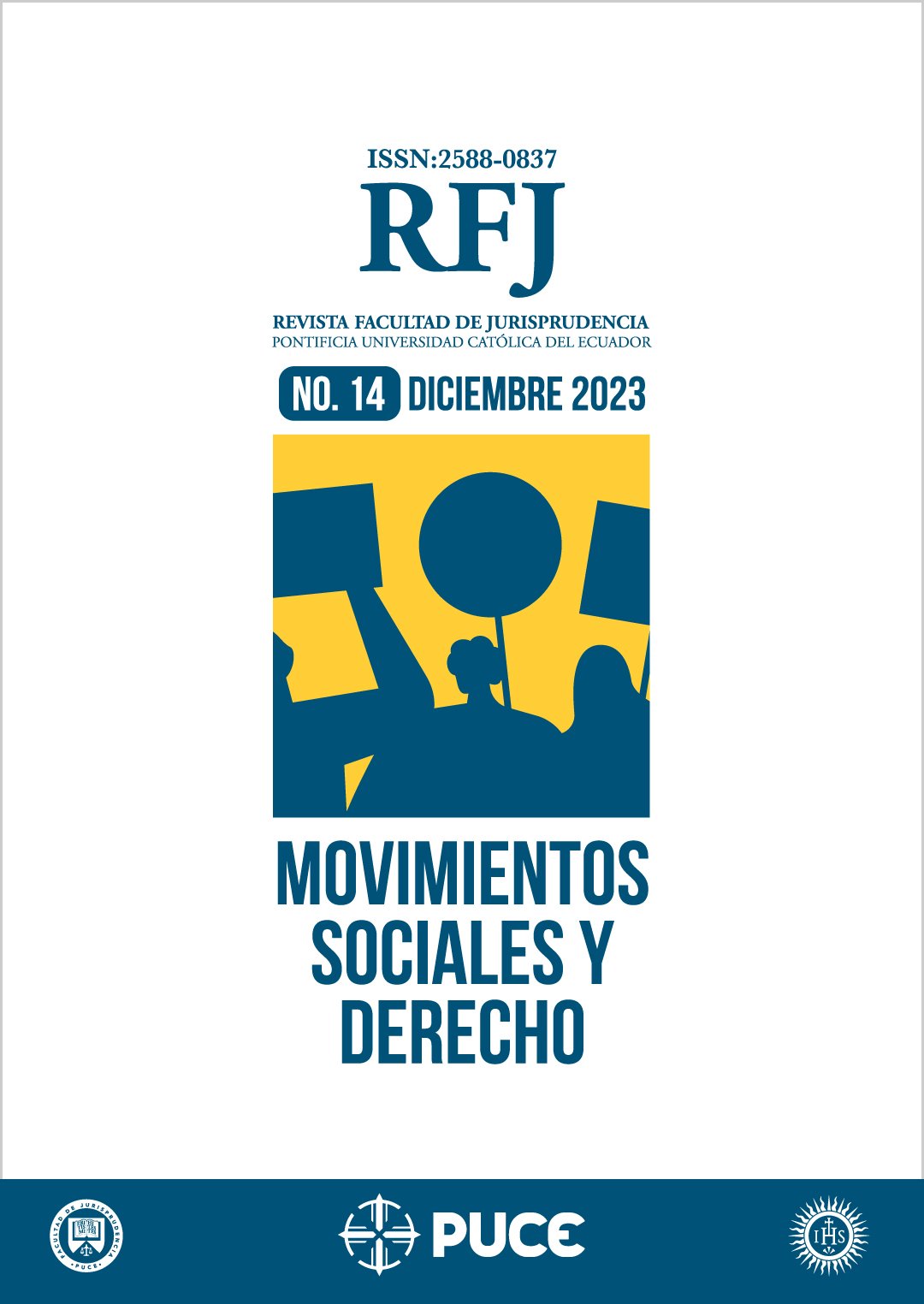
Main Article Content
Abstract
This article focuses on the jurisprudence of the Constitutional Court of Ecuador regarding the rights of nature, developed from 2019 to 2022. It begins by understanding that the standards issued during the analyzed period emerged as a result of synergy between ecological, indigenous, and animal rights social movements, and several judges of the Constitutional Court who had been familiar with these issues through their academic and social activism backgrounds. Based on this, the article analyzes the involvement of these movements through the amicus curiae figure to comprehend this synergy and understand the deliberative context of constitutional decisions. The result was an observation of how different social movements participated through collective action and within a favorable context that allowed their engagement with the magistrates in the development of constitutional rights.
Keywords: rights of nature, amicus curiae, social movements, democratic deliberation, judicial decisions.
Article Details
Section
How to Cite
References
Álvarez, F. (2015). Capital social, sinergia, impacto social y las organizaciones de la sociedad civil. Realidad y Reflexión, 15(41), pp. 7-27. http://hdl.handle.net/11592/8546
Ávila, R. (2022). La teoría sistémica del derecho en la jurisprudencia de la Corte Constitucional. Ecuador Debate, (116), pp. 127-138. http://hdl.handle.net/10469/18850
Bourdieu, P. (1980). Le capital social. Actes de la recherche en sciences sociales, 31(1), pp. 2-3. www.persee.fr/doc/arss_0335-5322_1980_num_31_1_2069
Contreras, A. y Vásquez, M. A. (2006). Derecho a la Participación y actores emergentes. En M. Pérez Campos (Ed.), Participación ciudadanía y derechos humanos: la universidad por la vigencia efectiva de los derechos humanos. Vol. 1. Caracas: Universidad Católica Andrés Bello.
Hart Ely, J. (1980). Democracy and Distrust: A Theory of Judicial Review. Cambridge: Harvard University Press.
Latorre, S. (2015). El ecologismo popular en el Ecuador: pasado y presente. Instituto de Estudios Ecuatorianos. https://www.iee.org.ec/ejes/sociedad-alternativa-2/el-ecologismo-popular-en-el-ecuador-pasado-y-presente.html
Longa, F.T. (2016). Acerca del ethos militante: Aportes conceptuales y metodológicos para su estudio en movimientos sociales contemporáneos. Argumentos, Universidad de Buenos Aires. Facultad de Ciencias Sociales. Instituto de Investigaciones Gino Germani. 45-74.
Moya, R. (1992). Réquiem por los espejos y los tigres. Quito: Abya-Yala y FLACSO. http://8.242.217.84:8080/jspui/handle/123456789/32335
Otto Pardo, I. (1998). Derecho Constitucional: Sistema de fuentes. Barcelona: Ariel.
Rawls, 191, pp. 364-5, citado en Scheuerman, W. E. (2019). Desobediencia civil. Madrid: Alianza Editorial.
Rodríguez Caguana, A. (2017). El Largo Camino del Taki Unkuy: Los Derechos Lingüísticos y Culturales de los Pueblos Indígenas del Ecuador. Quito: Huaponi Ediciones.
Saffon, M. P. y García-Villegas, M. (2011). Derechos sociales y activismo judicial. La dimensión fáctica del activismo judicial en derechos sociales en Colombia. Estudios Socio-Jurídicos, 13(1), pp. 75-107. https://revistas.urosario.edu.co/index.php/sociojuridicos/article/view/1511
Svampa, M. (2010). Movimientos sociales, matrices socio-políticas y nuevos escenarios políticos en América Latina. OneWorld Perspectives (1), pp. 1-29. https://www.memoria.fahce.unlp.edu.ar/art_revistas/pr.14215/pr.14215.pdf
Tanaka, M. (1995). Elementos para un análisis de los movimientos sociales. Análisis Político, (25).
Tarrow, S. (1997). El poder en movimiento. Los movimientos sociales, la acción colectiva y la política. Madrid: Alianza Editorial.
Tischler, S. (2010). La memoria va hacia adelante. A propósito de Walter Benjamin y las nuevas rebeldías sociales. Constelaciones. Revista de Teoría Crítica, 2, pp. 38-60. https://constelaciones-rtc.net/article/view/715
Verdesoto, L. (1986). Los movimientos sociales, la crisis y la democracia en el Ecuador. En Movimientos Sociales en el Ecuador. Buenos Aires: CLACSO, ILSIS. https://biblio.flacsoandes.edu.ec/shared/biblio_view.php?bibid=145933&tab=opac
Wolkmer, A. C. (2018). Pluralismo Jurídico: Fundamentos de una nueva cultura del Derecho. Madrid: Editorial Dykinson.